


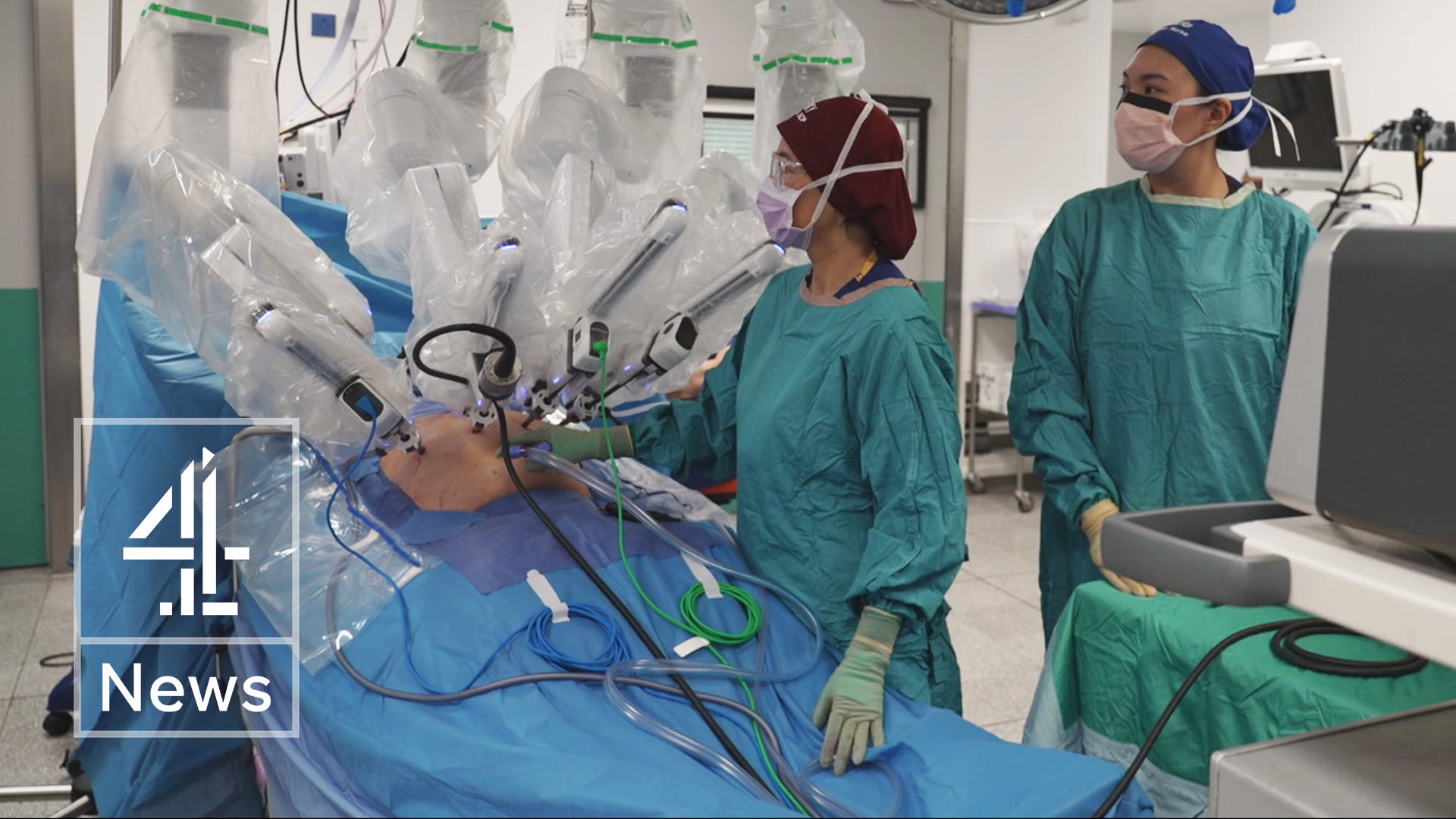
Nicholas Kokkinos had what none of us would wish for - a rare and extremely large hernia.
A Greek man living in the UK, he was sad (that really is the best word to use) that he had been forced to give up many of his favourite foods. Souvlaki, of course, he told me when I asked what he had missed most.
His surgeon, Professor James Gossage, at Guy’s and St Thomas’ NHS Foundation Trust in south London, showed me the scans. Even to this untrained eye, you could see the size of the hernia - and it was easy to imagine how uncomfortable Mr Kokkinos, pictured below, must have been.
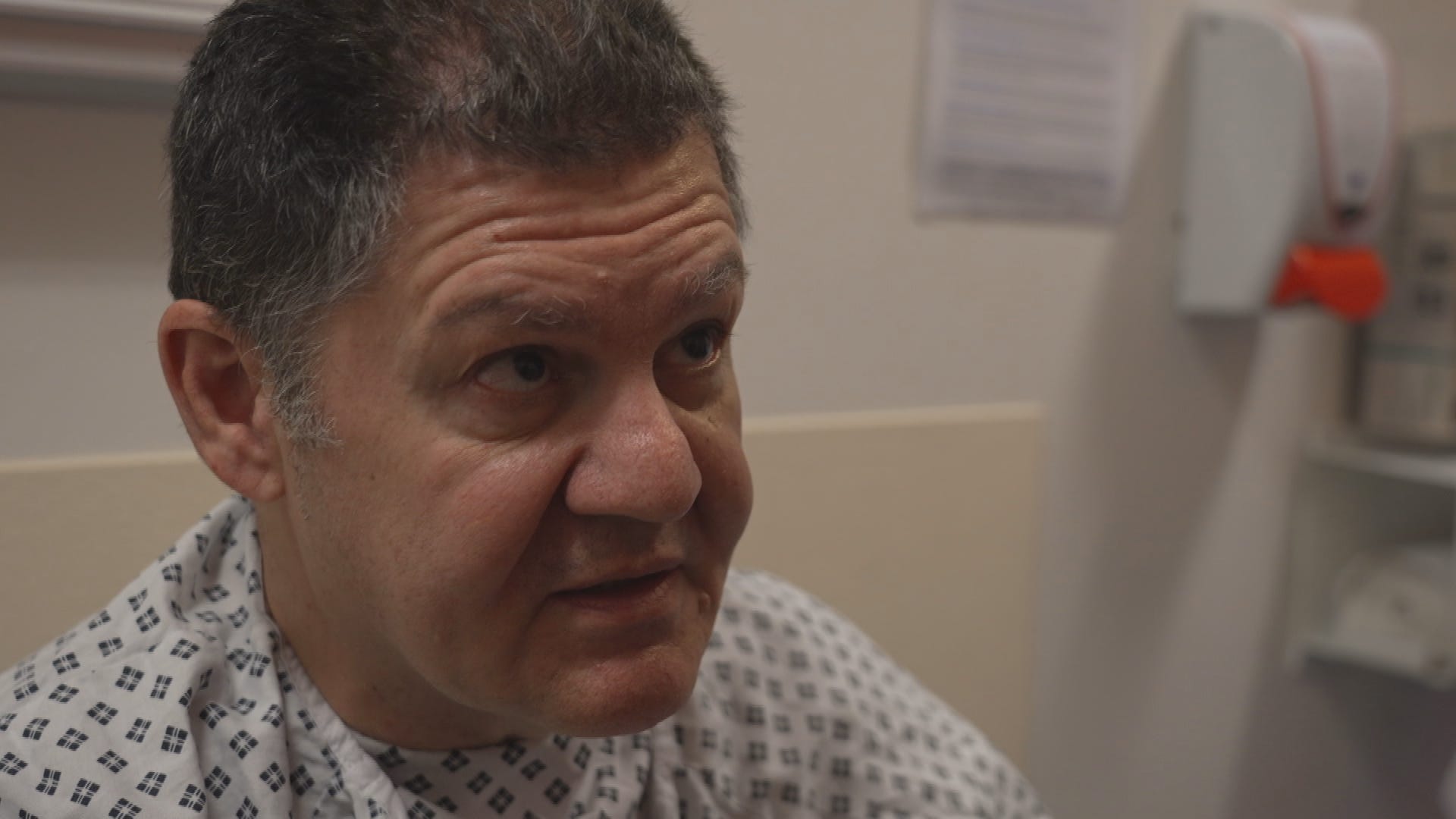
But that was not specifically why we were here. It was, instead, because the patient was about to become the first in the UK to have the surgery using a robotic-assisted technology.
Robotic-assisted technology
Called Force Feedback, it is attached to the da Vinci 5 robotic system, allowing the surgeon for the first time to feel the pressure they are exerting as they push and pull on the patient’s tissue inside their body.
Early results from the US show it’s making surgery more gentle and recovery time faster - and it’s even improving the time the patient is in the operating theatre.
In an NHS which is always striving to count the bottom line, to improve productivity, and to free up beds, this is music to the bosses’ ears.
In the operating theatre itself, we were able to see how it works.
Da Vinci robotic surgery has been used in this hospital for 12 years, and there are now more than 250 surgical systems across the UK and Ireland.
The robots really are taking over. But the gentle, guiding hand of the clinicians is still crucial.
How does it work?
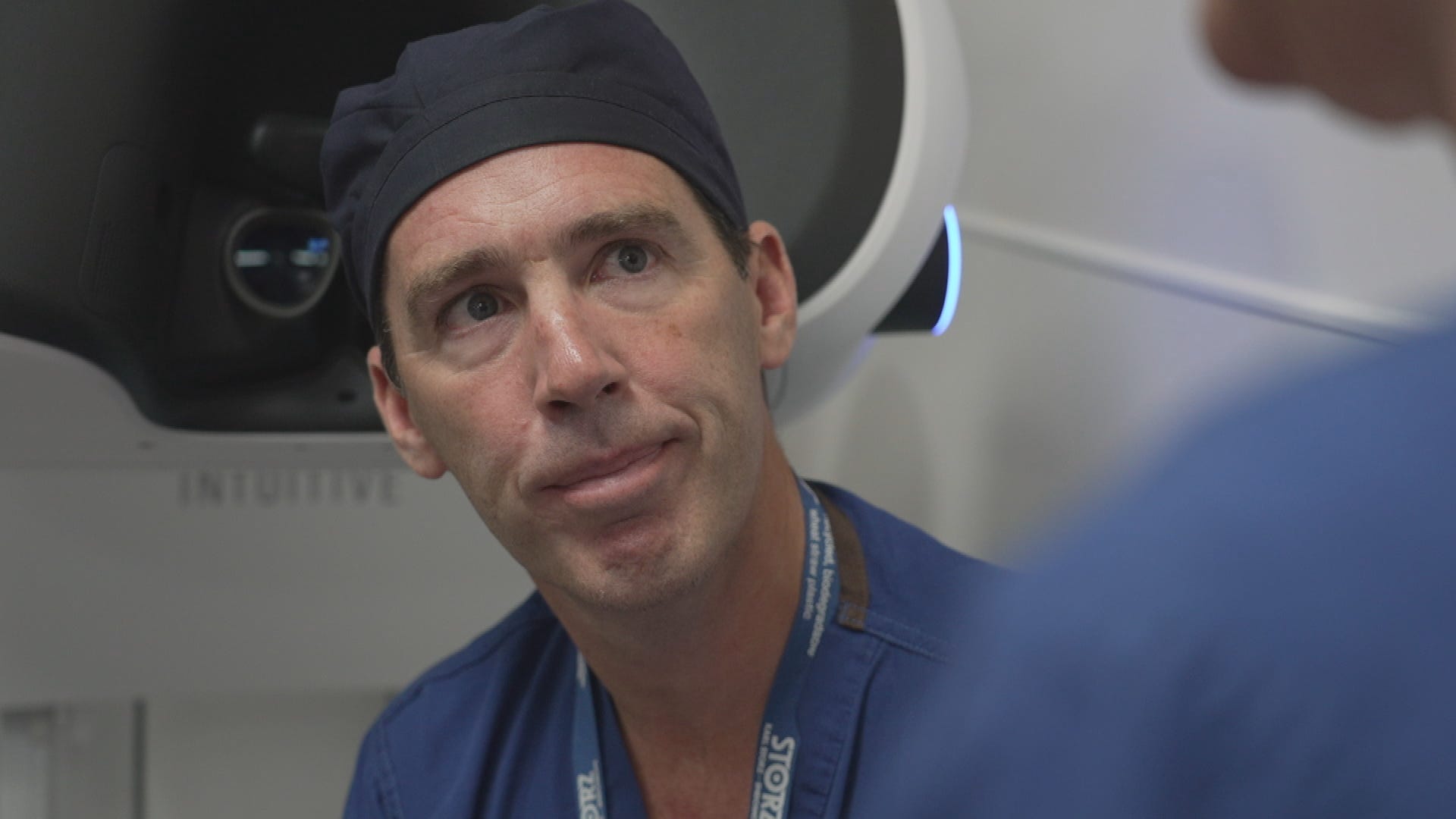
Professor Gossage, pictured above, sat at a console in one corner of the operating theatre, his head pressed up close so he could see the 3D screen. His hands were on two controls and his feet, clad only in socks for a better feel, pressed the pedals when needed.
On the operating table, clinicians inserted the instruments into the patient along with an arm with the camera.
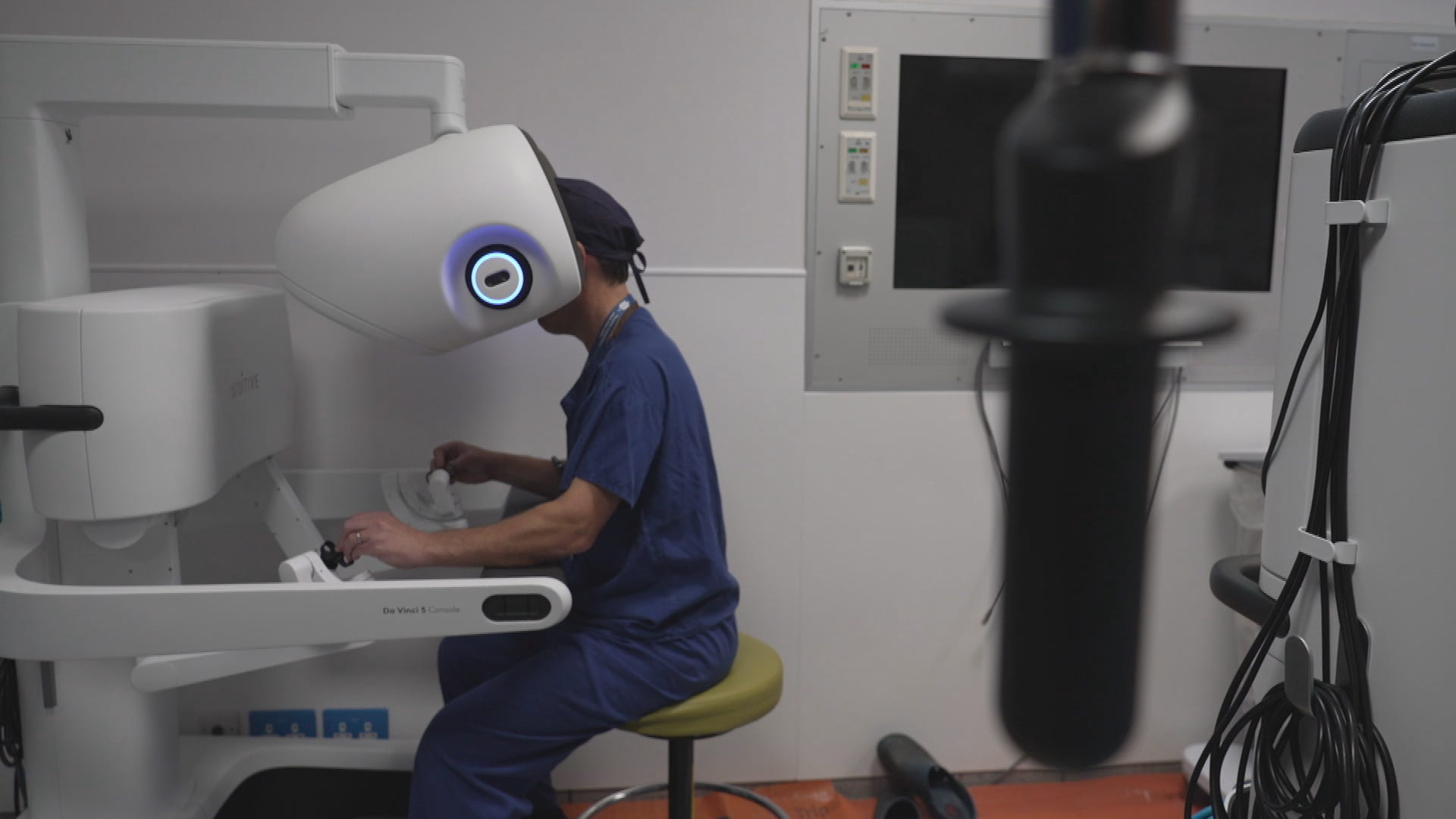
We had a clear view of the hernia on the screens around the room, and could see as Professor Gossage cut, cauterised and repaired. Gory for the average layperson, but fascinating at the same time.
The critical thing here, was of course, the Force Feedback. The sensors measure push, pull and directional forces in real time at about 1,000 times per second.
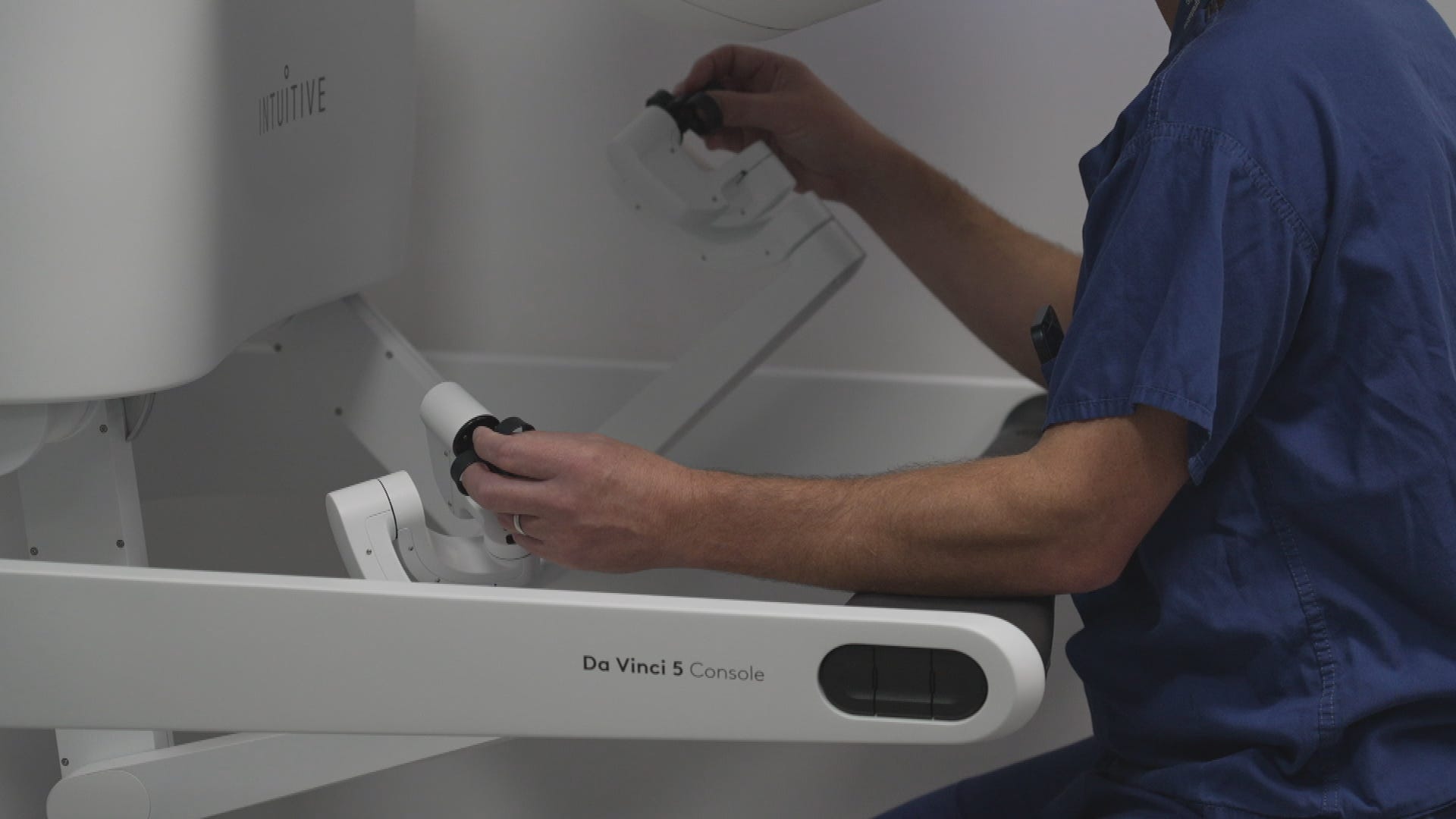
I asked Professor Gossage how he felt using it.
“It’s reassuring to know that you’re getting feedback about how hard you’re pushing and pulling on the tissue which I didn’t have before,” he said.
“Before I relied on visual clues, which if you’re being distracted or more concerned, the visual clues can be difficult to see, particularly if there is any bleeding or any problems. So this gives that reassurance that I’m not going to cause any damage when I move things to the side.”
From analogue to digital
This is all part of the NHS push to move from analogue to digital, highlighted in the 10-year plan.
The enthusiasm (at least in this operating theatre) was obvious. But at the same time, it’s acknowledged there is a postcode lottery, with some trusts not being able to afford the technology.
The Royal College of Surgeons has even called for centralised capital funding to expand the services. All eyes will be on the upcoming budget.

In the recovery room, Mr Kikkonos was not looking exactly chipper, but managed a smile.
He told me he was grateful for the technology, but added the human factor remained critical.
What’s the point, he asked, of having a Ferrari if you don’t know how to drive it?
