


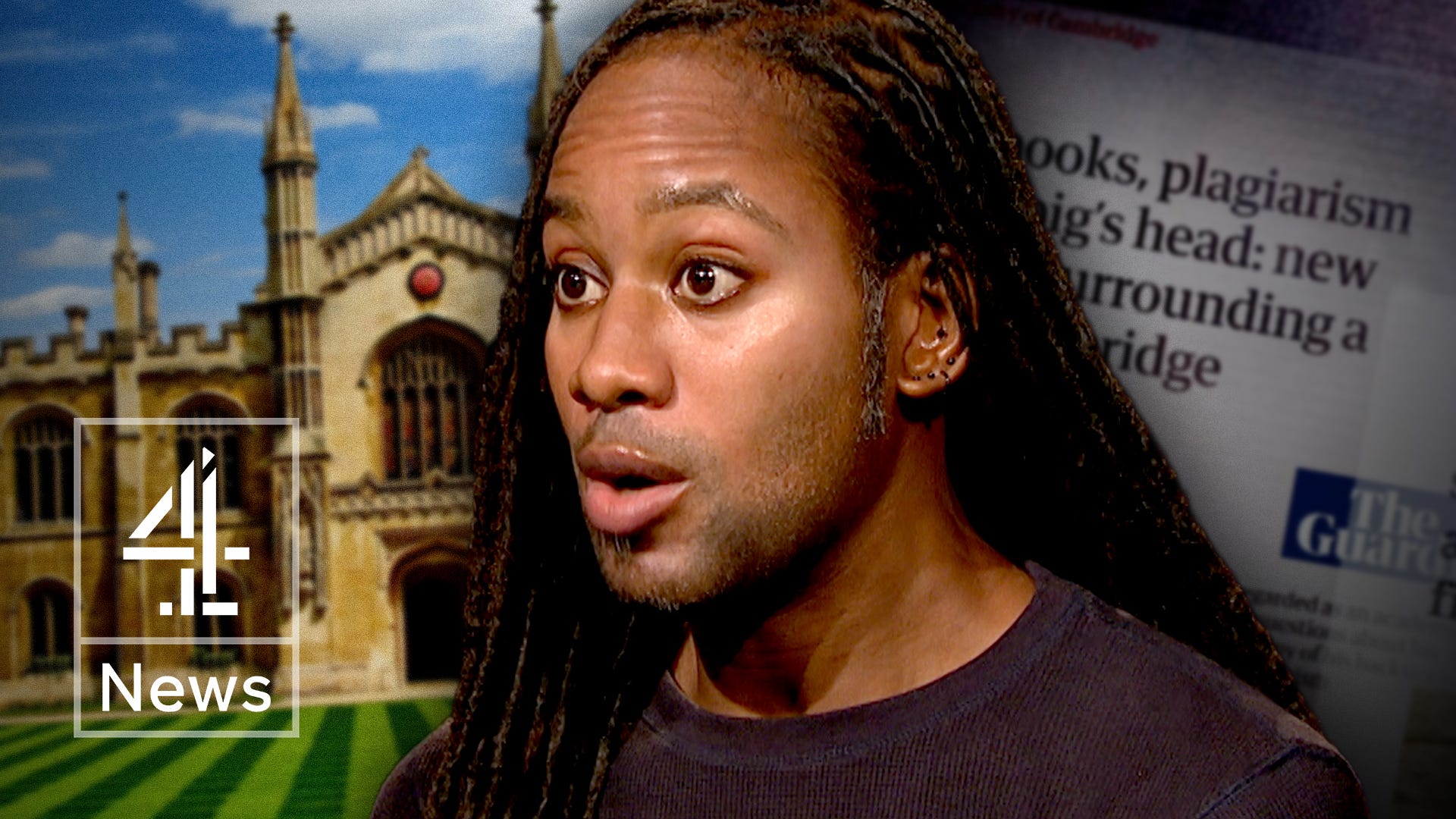
Professor Jason Arday was once the darling of the University of Cambridge.
In 2023, they proudly declared that he was the 800-year-old institution’s “youngest Black person ever appointed to a professorship”. There were only five other Black professors at Cambridge when he was hired.
Now he has resigned after a string of allegations about plagiarism and tall tales.
You’re reading InDepth: A weekly long read from Channel 4 News offering quality analysis and insight, diving deeper beyond the headlines

Some of that clearly raises questions about Mr Arday’s academic qualifications and why he was hired.
But the obsession around his non-academic background some say points to an obsession with him and what he represents for those keen to attack diversity at universities.
Thus, like a thesis, it is a complex story with chapters - not a simple left versus right argument.
Mr Arday is not the tip of the iceberg of some huge conspiracy or cover-up; rather he is an extraordinary case - as one member of staff at Cambridge said to me.
Chapter one: Arday the academic
Ever since Mr Arday was appointed a professor of sociology of education, he has benefited from a huge amount of press coverage but also scrutiny as individuals began to comb through his credentials.
He spoke about a “dark arts” campaign to The Times, one akin to the one that went after Claudine Gay after she was appointed the first Black female president of Harvard University. She lasted less than a year on the job.
Indeed, it was notable that the figure who wrote a Substack recently highlighting concerns around plagiarism in Mr Arday’s PhD dissertation was Nathan Cofnas, a former member of Cambridge and self-described “race realist” who once wrote: “In a meritocracy, Harvard faculty would be recruited from the best of the best students, which means the number of black professors would approach 0%. Blacks would disappear from almost all high-profile positions outside of sports and entertainment.”
Cofnas said that he ran Mr Arday’s dissertation through a plagiarism-detection programme and found substantial overlap with other published work.
That dissertation was submitted to Liverpool John Moores University, who have said “a confidential procedure was conducted” and “Professor Arday’s PhD still stands”.
Chapter two: Arday’s other stories
It wasn’t just Mr Arday’s dissertation. Two articles from journals in 2018 and 2020 had to be corrected due to a lack of sourcing, with Mr Arday admitting to the errors when he spoke to The Times.
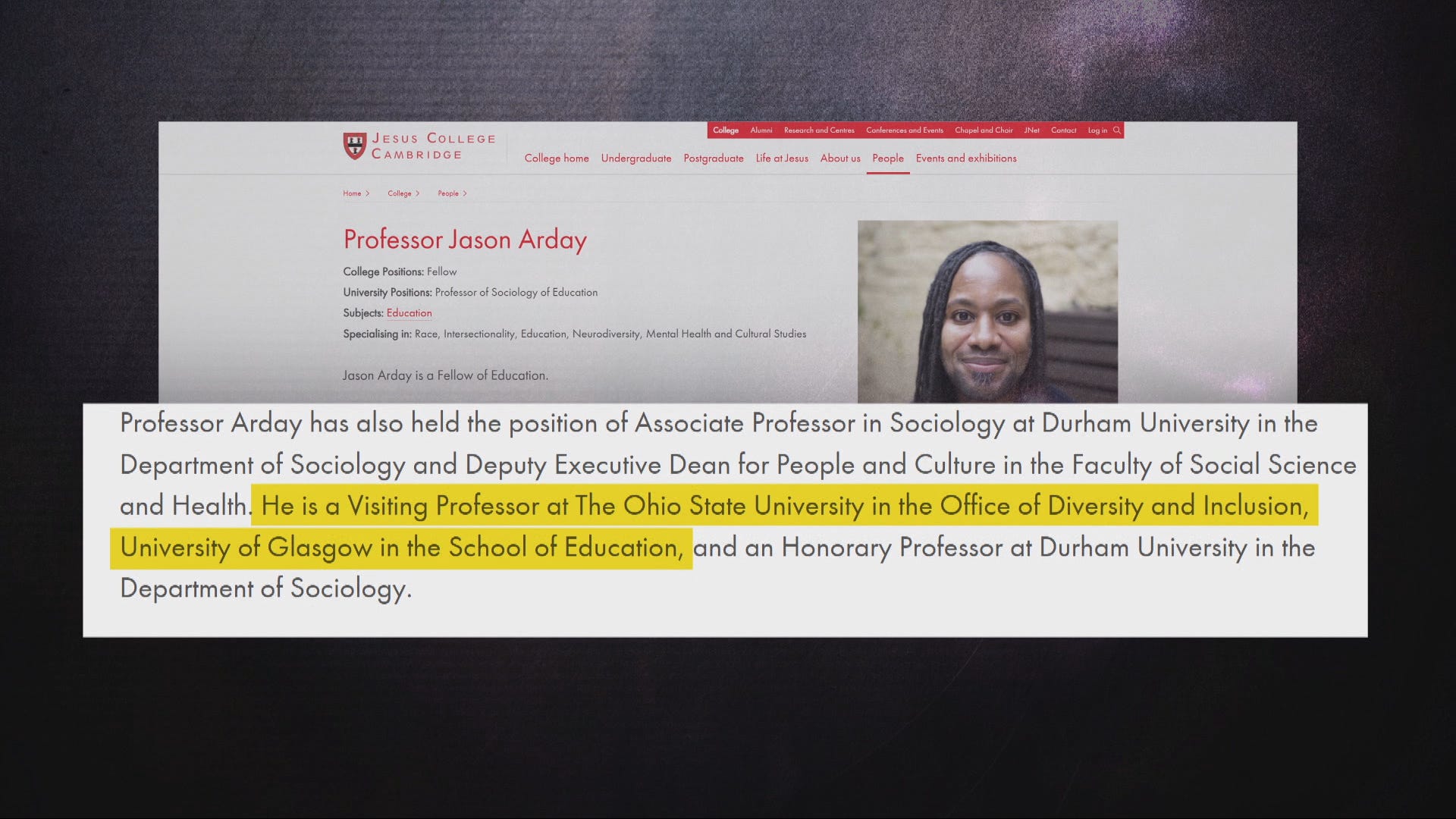
Yet more and more stories came out: The Guardian questioned a claim that a pig’s head had been sent to his parents’ home; he had to clarify that he single-handedly did not raise £5m for charity; and both Glasgow University and Ohio State Universities said Mr Arday had never held visiting professorships at their institutions despite them previously appearing on Jesus College Cambridge’s website, pictured below.
He announced his resignation on Wednesday evening, stating: “While criticism is inevitable, what I have experienced has gone far beyond scholarly disagreement. The relentless accusations, speculation and public commentary have taken a profound toll on me and on those I love.”
He said the resignation should not be “mistaken for an acceptance of the narratives that have surrounded me”.
Chapter three: Plagiarism
I sat down with John Preston, Emeritus Professor of Sociology, University of Essex, to discuss the case. I asked him whether he was concerned that this case was being used by figures to not raise concerns about plagiarism, but to attack diversity, sociology and Cambridge itself.
“That’s possibly true, but what’s the best defence against that?” he said. “The best defence against that for me is to maintain academic standards. And sociology does have academic standards and they need to be maintained.”
But why the focus on Mr Arday?
Three years ago, the historian William O’Reilly kept his job at Cambridge despite being found to have copied a student’s work and published it as his own. There was little media fanfare about that.
O’Reilly previously told the Varsity publication in 2024 that he had “never consciously sought to represent the work of others as mine”. He also apologised that his acknowledgement of work was not to the standard it should have been.
“Plagiarism is generally taken the least seriously,” the journalist Brendan Borrell, who wrote about Mr Arday for Retraction Watch, told me.
“A lot of charges have been raised, they’ve been confirmed, and many people remain in their positions.”
Why?
“I don’t have a good answer for that, honestly,” Borrell said. “There is the ability to deny it and say, ‘Oh, this was just a little bit of sloppiness.’ In the case of Arday, I think it’s undeniable.”
Other figures pointed out that universities are underfunded, with staff being asked to do more with less time and money. Does that make plagiarism more prevalent?
“There’s been redundancies here at Essex, there’s been redundancies at other universities. It’s very difficult for academics. There’s been a ‘publish or perish’ mentality. They have to publish articles in the best journals to almost survive these calls of redundancies.”
Does that mean plagiarism is rife?
“I’m sure there is pressure on some academics to look at other people’s work.”
Speaking to figures like Professor Preston, academia is a world of reputation and trust - and it’s clear in this case that worked against Cambridge.
Chapter four: Questions for Cambridge
That is not to excuse the university for its conduct - not just for hiring Mr Arday, for pushing him out into the spotlight, but also how they have handled this whole affair.
One individual at the university who wished to remain anonymous said the fact that Cambridge had not got on top of this story early had played into the hands of certain individuals.
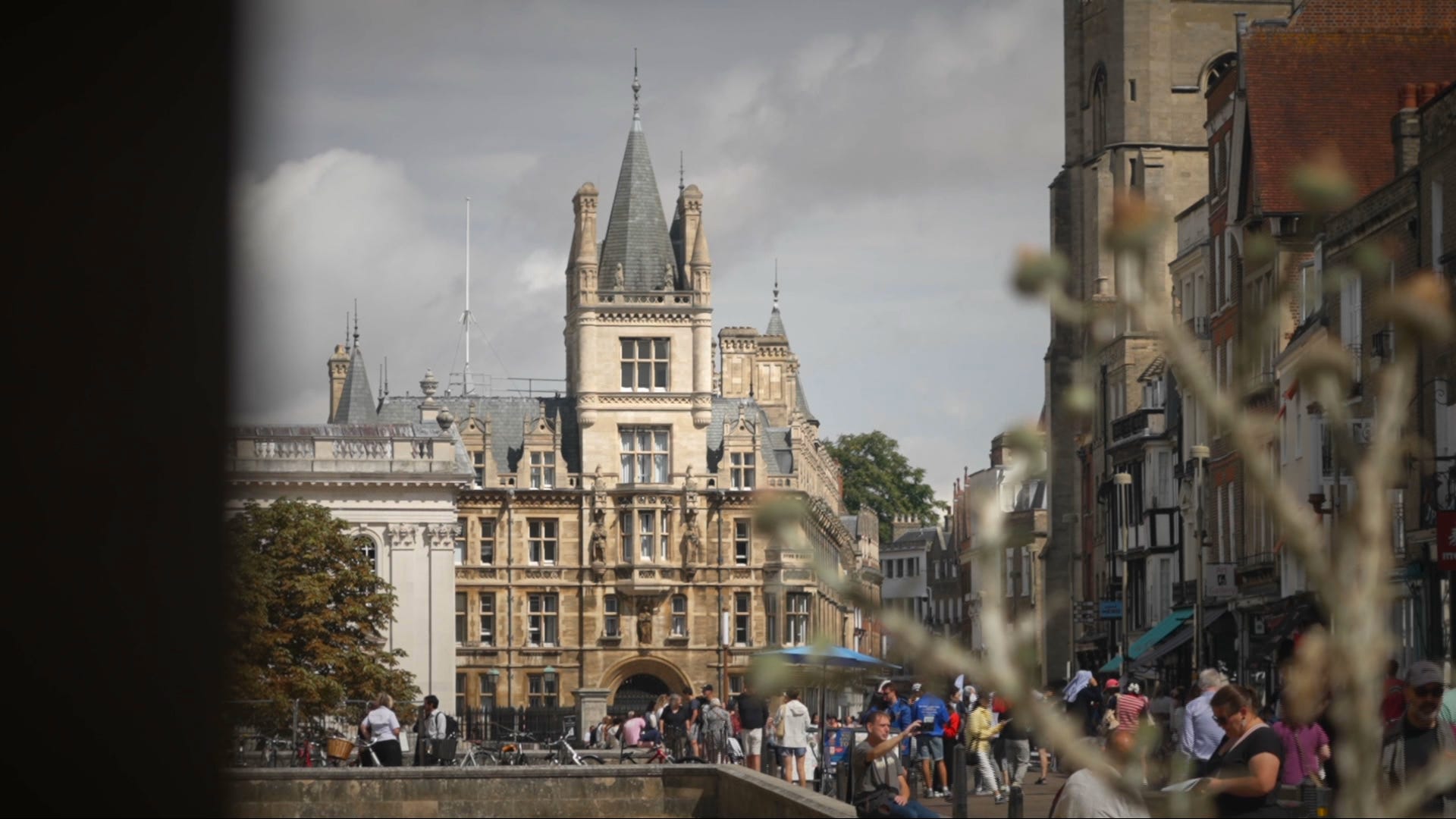
“We can already see that much of the commentary in the media is already concluding that the promotion of diversity and inclusion are antithetical to academic integrity and that Arday is the tip of the iceberg rather than an extraordinary case,” they told me.
“There is no basis for concluding that Arday is part of a broader picture, at Cambridge or elsewhere, and in fact there’s considerable evidence that Black academics are still hugely underrepresented at Cambridge and that they are being fired at pace by other universities which are closing their departments.”
Prior to the resignation of Mr Arday, Cambridge said it had begun an investigation following new information about the professor’s academic qualifications and honorary appointments. Jesus College also said they were also launching their own process.
Both the college and university emphasised their concern for Mr Arday, with Jesus College stating: “We recognise that this is a very difficult time for him and his family, and ask that they are treated with compassion and respect”.
The university said it continued to provide support to him.

Arday was a conman from the beginning. His story was believable only by the most gullible of people. He is a liar of Trumpian stature.
The hypocrisy is remarkable. Matt Goodwin - a former Professor of Politics at the University of Kent - published a book containing AI-assisted research, misquotations, factual errors and even ChatGPT links in its references. Yet many of the people attacking a Black professor for using AI were strangely quiet about "MattGPT".
Apparently AI is an unforgivable threat to academic credibility - except when a white far right politics professor does it.