


There are many things I expected to report on this year. Eurovision boycotts. Arts funding. The future of social media.
Instead, here I am analysing the gender politics of a cheating AI-generated strawberry.
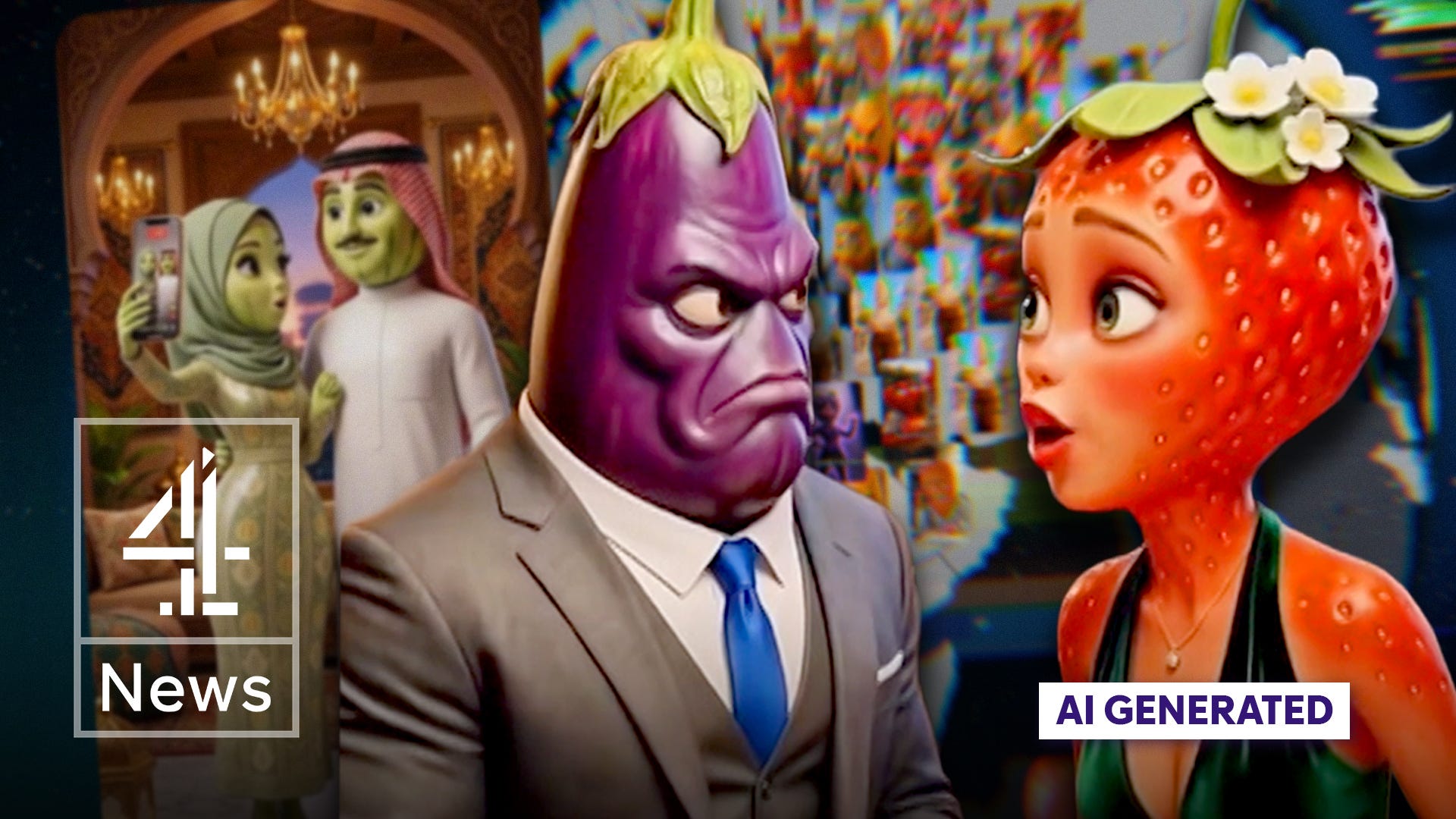
If you’ve somehow avoided this corner of the internet so far, let me introduce you to the bizarre world of AI fruit dramas: starring hyper-muscular bananas, glamorous cherries and emotionally manipulative peaches. Stay with me.
The plots are pure reality TV. Affairs, betrayals, body-shaming, love triangles.

One minute a strawberry is crying because her banana boyfriend has left her for a “younger” fruit. Next, a ripped watermelon appears to steal somebody’s kiwi wife.
And millions of people are watching. Not thousands. Millions.
‘Brain rot’ content
One creator told Channel 4 News that his videos now pull in around 400 million views every month - a number so huge it barely sounds real.
Scroll through TikTok, Instagram or Facebook and it quickly becomes obvious this is no niche internet joke. The videos are spreading rapidly across Asia, the Middle East and Europe.
At first glance, it all feels harmless and absurd. ‘Brain rot’ content for an exhausted internet age. But the longer you watch, the stranger it becomes.
Because underneath the shiny animation and ridiculous fruit characters are some very familiar messages.
Women-coded fruits are often portrayed as gold diggers, cheaters or manipulators. Male-coded fruits are rich, dominant and hyper-masculine.
Again and again, the storylines circle back to humiliation, betrayal and punishment.
Basically, the same old misogyny dressed up in fruit costumes. And you don’t need a degree in gender studies to know what the aubergine cartoon represents.
Manosphere
Back in the land of real life, I visited the University of Portsmouth to get Dr Alessia Tranchese’s take, who is pictured below.

She’s an Associate Professor in Language, Feminism and Digital Media.
Her argument was simple: remove the AI gimmick and these narratives look very similar to the ‘manosphere’ content already thriving online.
The important point, she said, was scale.
One weird banana video probably changes nobody’s worldview. But millions of videos, pushed endlessly by algorithms, start to normalise ideas over time.
AI doesn’t invent these beliefs out of nowhere - it absorbs them from us, then feeds them back amplified, faster and cheaper than ever before.
Toxic gender dynamics
The creator we interviewed, Bahle Chonco, pictured below, sees things differently. He insists the videos are entertainment, not ideology. A reflection of society rather than an attempt to shape it.

And, honestly, part of me understands what he means. These videos didn’t appear out of thin air. The internet was already saturated with toxic gender dynamics long before somebody decided to animate a strawberry with eyelashes.
But that’s also what makes this trend fascinating: it reveals something uncomfortable.
Recently, Meta boss Mark Zuckerberg declared social media had entered a new AI-driven phase.
It’s easy to point the finger at faceless AI. But with millions around the world tuning in to watch a strawberry being body-shamed by a banana, perhaps that tells us less about tech, and more about us.

Thanx I love yr journalism
What a shock, the shit algorithm built by white American racist misogynists should turn out like them. Get a grip the internet needs to be turned off at the mains, and watch the last ember of light disappear.