


Midterm races are reaching a feverish crescendo: as Democrats dream of a blue wave, and Republicans ramp up their efforts to prevent it from crashing into Congress, and shifting the balance of power.
Those linked to Donald Trump’s party are pouring in tens of millions of dollars to try to shore up candidates in tight races, as the President himself criss-crosses red states, from Alaska to Texas to Kansas, and later this week, Florida. That money can have a real impact.
But, in many ways, the conditions could not be better for Democrats, who can urge voters to give an unpopular President a kicking in the face of rising prices, an unwelcome war in the Middle East, and a recent spate of pro-Russia rhetoric (which is alarming even the most loyal Republicans).
Welcome to Channel 4 News’ weekly TrumpWorld newsletter, where our experienced correspondents take you inside the chaos, drama and consequences of Donald Trump’s America.

A blue wave victory would no doubt give a huge boost to those who find Trump’s second administration even more egregious than the first. A Democrat controlled House could open up real scrutiny into allegations of corruption from the President down.
Taking the whole of Congress could stymie Trump’s legislative agenda and blunt the sharpest edges of his controversial policies, including an immigration crackdown that many see as draconian.
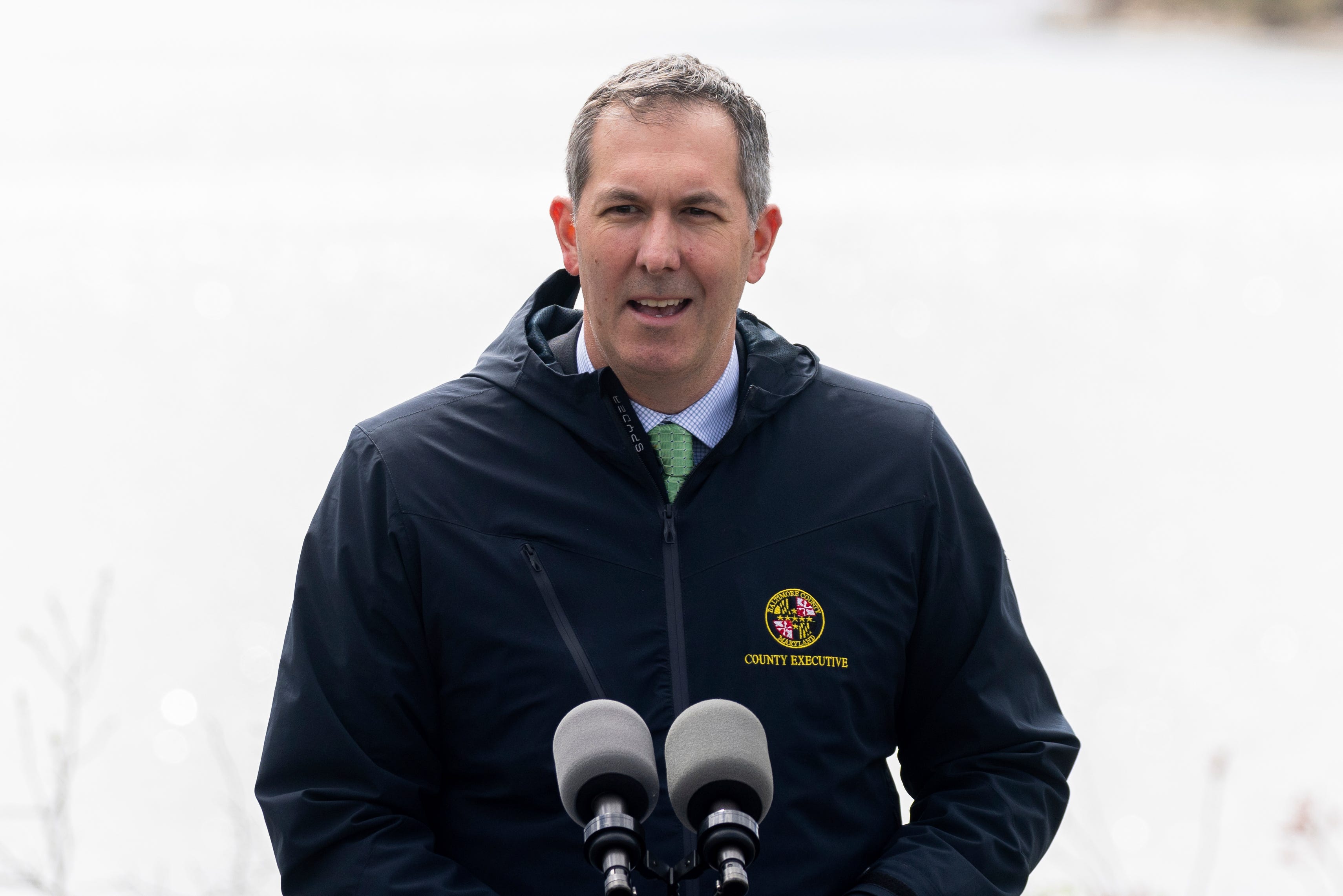
And there are reasons for Democrats to be excited. Yesterday, I was speaking to Johnny Olzsewski, pictured above, a Democratic Congressman from Maryland who sits on the foreign relations committee. What he was hearing on the doorsteps left him feeling confident about the House and even “bullish” about the Senate.
Careful what you wish for
Voters seemed hugely angry about Trump’s failure on affordability, he told me, arguing that “people are really feeling the pinch at the pump and the grocery store”.
A victory for Democrats could mean that Congress could influence the administration by making Pentagon funding, for example, contingent on the US fully sharing intelligence with Ukraine, or on what happens next in Iran.

But should Democrats be careful what they wish for?
There are certainly risks, even if a blue wave does emerge. The first is linked to why they might do well in the November vote. In some ways, I’m reminded of the UK In 2024, when Labour was swept to a landslide on the back of fury aimed at the Conservatives. A huge victory, no doubt, but one in which any enthusiasm quickly crumbled in the face of the reality of Government.
In Michigan, PF Global carried out a focus group on behalf of Channel 4 News, and it gave a clear message.
Voters were angry with Trump - but that was not the same as a ringing endorsement for Democrats, who they described as “lost...sad...confused”. So, even with a blue wave, a challenge for Democrats, to show voters what they stand for, and why they should be trusted.
But the second concern for Democrats is slightly different and linked more to what it will mean if they take control of Congress. Trump has already started his claims - that if Democrats win - then they should be blamed for any further decline in economic conditions.
Avoiding the blame trap
John Neffinger, a Democratic operative and former communications director for the DNC, told me that while voters do tend to lay economic blame more at the President and White House - this could be an issue.
“The risk is that Democrats will own more of the blame than they do now,” he argued, but without enough power to actually fix the situation. After all, the President will retain executive power, whatever happens in Congress.
Neffinger argued that in the 2028 election, like 2024 and 2026, affordability would dominate (alongside potentially massive labour force disruption as a result of AI and further geopolitical crises).
And so Democrats will need to avoid any complacency in the wake of the midterms, and avoid falling into the blame trap.
“Whichever party going into 2028 that can make the case to voters that they are serious about putting less popular priorities aside, and focus entirely on working people, will have the best chance, “ he added.
What the party stands for, and who can take that idea forward, will start to be formed almost as soon as these midterms are over.
That is when attention will turn to exactly which Democrat and which Republican will face off in the next Presidential election, as the US heads into what could be a critical turning point for a country long seen as the leader of the free world, but whose global reputation is increasingly under strain, day by day.

The only question that matters imo is how Trump can be removed. His latest gratuitous onslaught on journalists/others during yesterday's WH briefing yesterday was ugly, unhinged and outside any definition of decent, respectful behaviour - link here to a cut of it by the outstanding independent journo Aaron Ruper's must-follow (imo) Bluesky account. London-based German journo/commentator Annette Dittert put it succinctly: 'How a country is unable to get rid of someone like this is beyond me'. https://bsky.app/profile/atrupar.com/post/3mydgzgvnhc2q
Sounds to me you’re talking about ‘business as usual’ as if this is just another ‘flip the House’ in US politics. This is NOT BUSINESS AS USUAL. No matter what the Dems face once they win the midterms —- their ONLY job is to shore up the defences against the fascism that the Trump regime (not ‘administration’, *regime*) represents. Stop trying to normalise this shit.